Newborn and Pets: Safe, Calm First Introductions
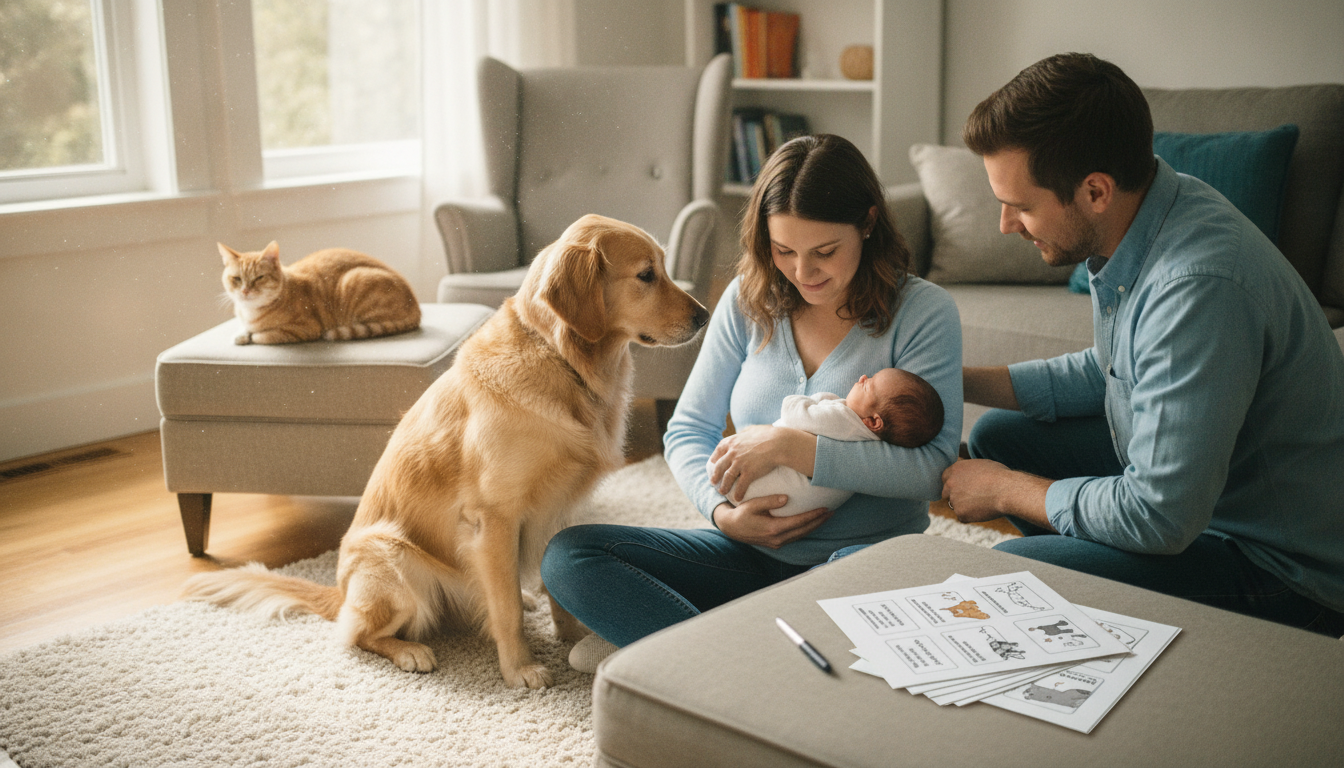
Introducing a Newborn to Pets: A Calm, Step-by-Step Plan for Safe First Meetings
Bringing a newborn home changes routines, sounds, and attention—things pets notice immediately. A gentle introduction reduces stress for everyone and helps build safe, positive habits from day one. Use the steps below to prepare your home, set boundaries, and guide the first meetings at a pace your pet can handle.
Before Baby Comes Home: Set Up the Environment
- Create clear boundaries: establish pet-free zones (nursery, changing area) and pet-approved zones (crate, bed, mat) so your pet always knows where “yes” spaces are.
- Practice new rules early: reinforce “no jumping,” “no pawing,” “go to mat,” and waiting at doorways with treats and calm praise—before a baby is in your arms.
- Desensitize to baby gear and sounds: roll the stroller around, set up swings, and introduce new scents. Play baby audio at low volume and gradually increase it while rewarding relaxed behavior.
- Plan for attention shifts: add enrichment now (walks, puzzle feeders, sniff games, short training sessions) so your pet has healthy outlets when your schedule tightens.
- Review health basics: keep vaccinations and flea/tick control current, trim nails, and stay on top of grooming and dental care. Discomfort can lower tolerance and shorten a pet’s fuse.
- Confirm safe sleeping and feeding logistics: pets should not be able to access a bassinet or crib. Keep pet bowls and litter boxes out of baby areas to reduce hygiene issues and traffic.
For public health guidance on safe pet handling and household hygiene around infants, the CDC Healthy Pets, Healthy People resources are a solid reference point.
Day One Homecoming: Keep It Predictable and Low-Key
- Start with a calm entry: one adult greets the pet first without the baby, allowing your pet a minute to decompress before anything new happens.
- Swap scents: offer a baby blanket or hat for a brief sniff, then reward calm curiosity. Avoid pushing the item toward your pet’s face or “testing” reactions.
- Use management tools: a leash for dogs, and a baby gate or closed door for cats/dogs when needed. The goal is to prevent rushing, jumping, crowding, or blocking doorways.
- Maintain routine anchors: keep feeding and walk times as consistent as possible. Predictability is calming, especially on a day packed with new cues.
- Limit the audience: postpone visitors and excitement. Fewer people and fewer variables help you read your pet accurately.
The First Face-to-Face Meeting: A Gentle Sequence
1) Choose the right moment
Plan the first introduction after your pet has exercised and eaten. A tired, satisfied pet is typically better regulated and less impulsive.
2) Start with distance and structure
Have one adult hold the baby securely while another manages the pet. Start a few feet away and reward your pet for sitting, lying down, or simply staying soft-bodied and calm.
3) Let your pet opt in—briefly
Allow a short, controlled sniff near the baby’s feet (not the face or hands). Keep the first session under 1–2 minutes. If your pet hesitates, that’s okay—distance is information, not “bad behavior.”
4) End on a good note
Stop while your pet is still calm. Separate and offer a reward or enrichment activity to build a positive association with the baby’s presence.
5) Repeat micro-meetings
Several short, successful sessions are safer than one long, unpredictable interaction—especially during a sleep-deprived first week.
Quick reference: Pet stress signals and what to do
| What you might see | What it can mean | What to do right away |
|---|---|---|
| Lip licking, yawning, turning head away (dogs); tail flicking (cats) | Mild stress or uncertainty | Increase distance, ask for a simple cue (sit/go to mat), reward calm, keep the session short |
| Stiff body, hard stare, raised hackles (dogs); crouching, ears pinned (cats) | High tension and possible escalation | End interaction immediately, separate with a gate/door, give the pet space and quiet |
| Growling, snapping (dogs); hissing, swatting (cats) | Clear warning; safety risk | Separate safely, avoid punishment, consult a qualified trainer/behaviorist, increase management and slow the plan |
For additional safety fundamentals—especially around bite prevention—review the American Veterinary Medical Association (AVMA) dog bite prevention guidance.
Dog-Specific Tips: Leash Skills, Jumping, and Safe Proximity
If you need help building calm behaviors with positive reinforcement, the ASPCA training and behavior resources can be a helpful starting point alongside professional support.
Cat-Specific Tips: Sleeping Spaces, Scratching, and Curiosity
Daily Routines That Prevent Problems
When to Slow Down and Get Help
A Simple Printable Checklist to Keep on the Fridge
Printable checklist for introducing your baby to pets is a quick, fridge-friendly way to keep the plan on track.
For a simple “grab kit” approach—treats, leash, poop bags, baby gate latches, and a spare onesie in one spot—an Insulated Thermal Lunch Bag can work as an easy-to-carry organizer you can move room to room.
FAQ
How soon should a pet meet the newborn?
Day one can work well if the household is calm and your pet has had time to decompress first. Keep the first contact short, supervised, and distance-first, then repeat brief sessions as your pet stays relaxed.
Is it safe to let my dog lick the baby?
Avoid licking on the baby’s face or hands due to hygiene concerns and because sudden baby movements can startle even friendly dogs. Redirect licking to a toy or reinforce a “go to mat” settle so your dog learns calm proximity instead.
What if my cat keeps trying to get into the crib or bassinet?
Use consistent management: closed doors, secure barriers, and making the crib/bassinet off-limits every time. Add a nearby cat tree or perch as an acceptable alternative and prioritize nighttime safety with a fully secured sleep space.










Leave a comment